
Microcement Kitchens Melbourne
Award-Winning Finishes for Benchtops, Splashbacks & Floors
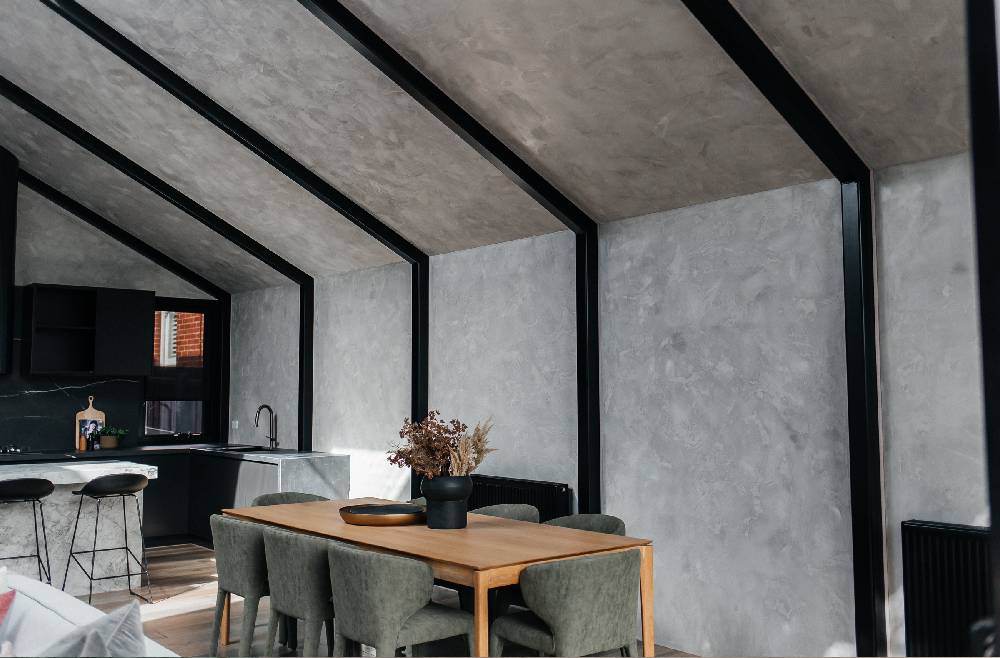
Your kitchen benchtop, splashback, and floor as one continuous surface. No grout lines, no visible joins, no tiles. Microcement delivers the seamless, architect-specified finish that defines modern Melbourne kitchen design, and Melbourne Artisan are the award-winning specialists who install it.
We handle the full installation in-house surface preparation, application, and sealing, using professional-grade materials on every project.
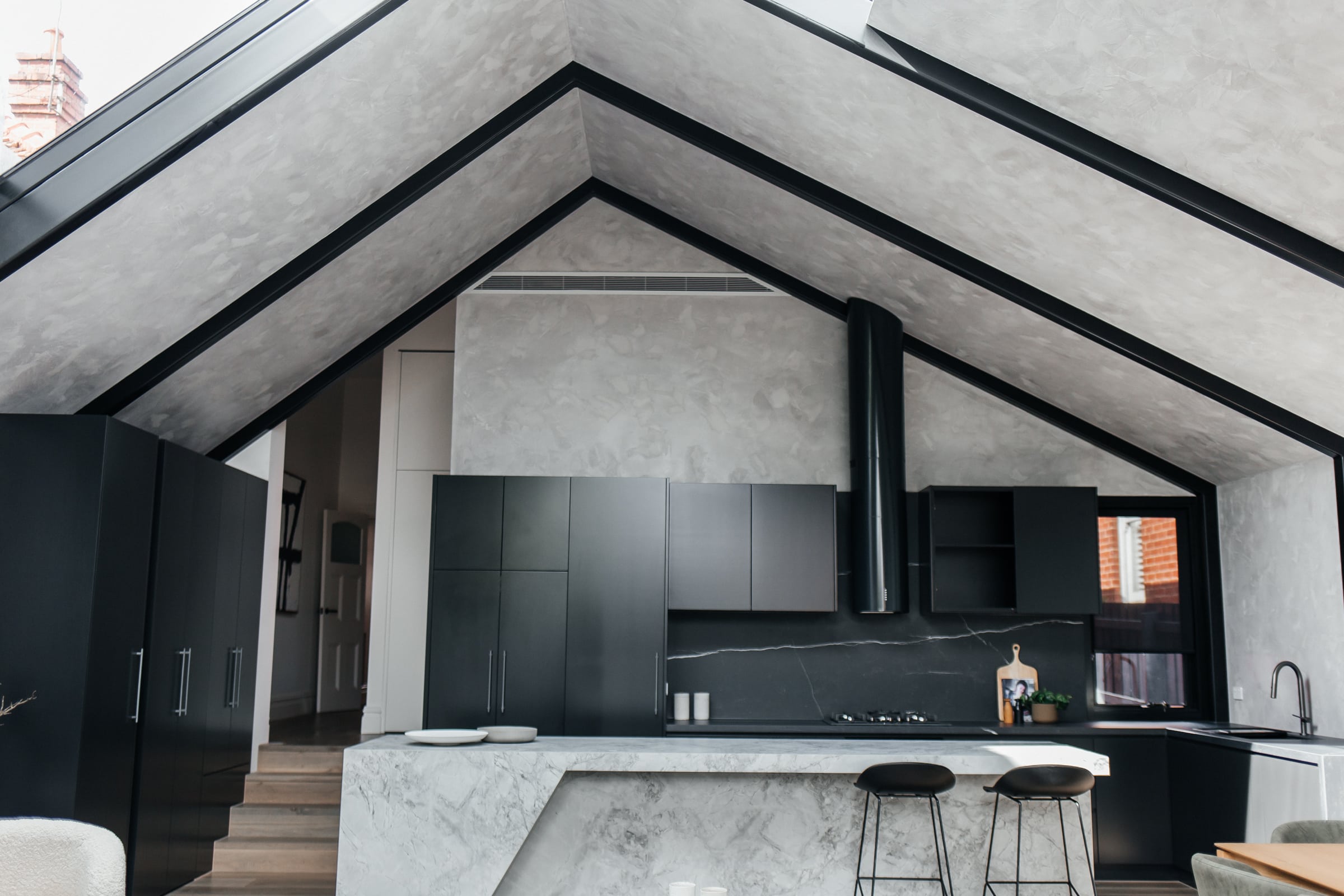
What Makes Microcement the Right Choice for Your Kitchen?
Melbourne kitchens have evolved. Open-plan living means your kitchen floor flows into your dining and living zones. Your benchtop is a design statement as much as a work surface. Tiles and grout with their visible joints and permanent maintenance liability simply don’t belong in this picture anymore.
Where We Apply Microcement in Your Kitchen
A kitchen gets used hard every day by everyone in the house, and most surface materials eventually show it. Grout lines between tiles trap grease and darken over time, stone joins become visible, and laminate edges can lift. Microcement avoids those weak points because it has no joins. Applied as one continuous surface across benchtops, splashbacks, floors, and cabinet faces, it creates a seamless finish that stays durable and often looks better even years later with minimal upkeep and maintenance needs.
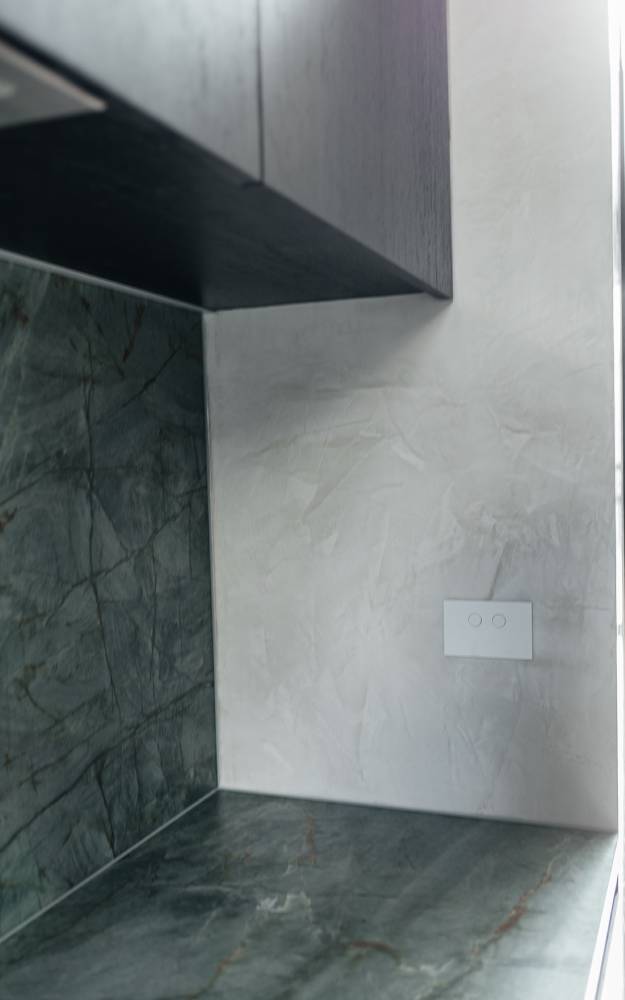
Kitchen Benchtops
The benchtop is where microcement makes its strongest statement. A hand-trowelled microcement benchtop has no visible joins, even on island benches and can incorporate integrated sinks, curved edges, and sculptural forms that stone or laminate cannot achieve. The result is a surface that looks and feels bespoke because it is.
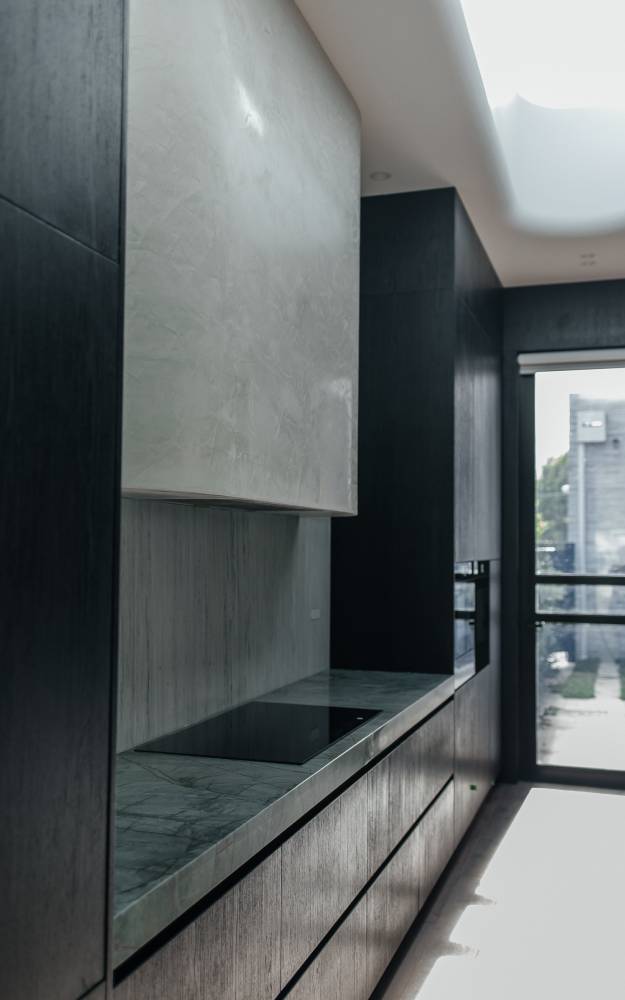
Kitchen Splashbacks
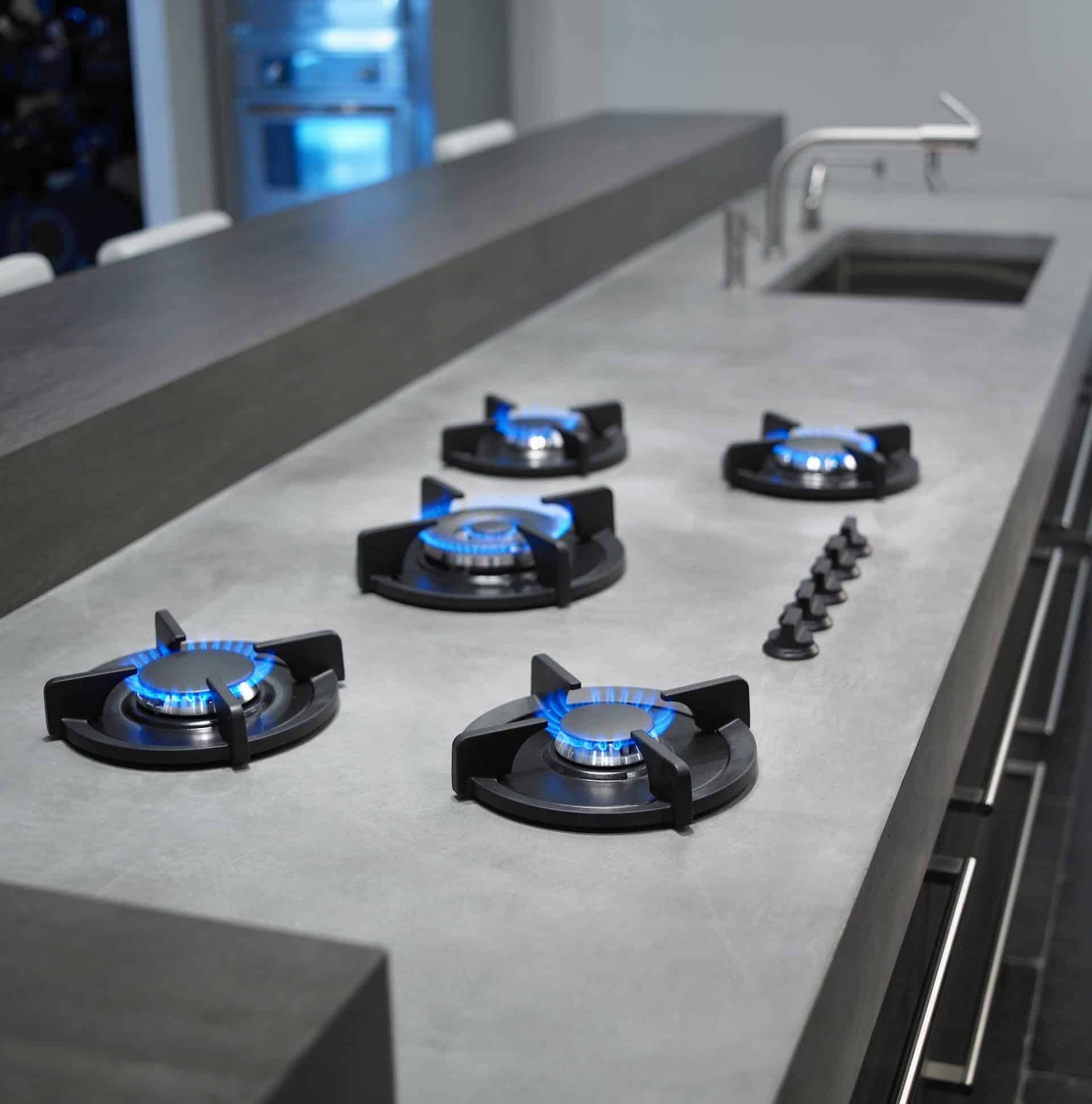
A microcement splashback eliminates grout lines entirely, creating a clean, continuous surface from benchtop to overhead cabinetry. It can be colour-matched precisely to your benchtop for full visual continuity. One important note: we do not recommend microcement directly behind a cooktop or open flame. See the section below for honest details on this.
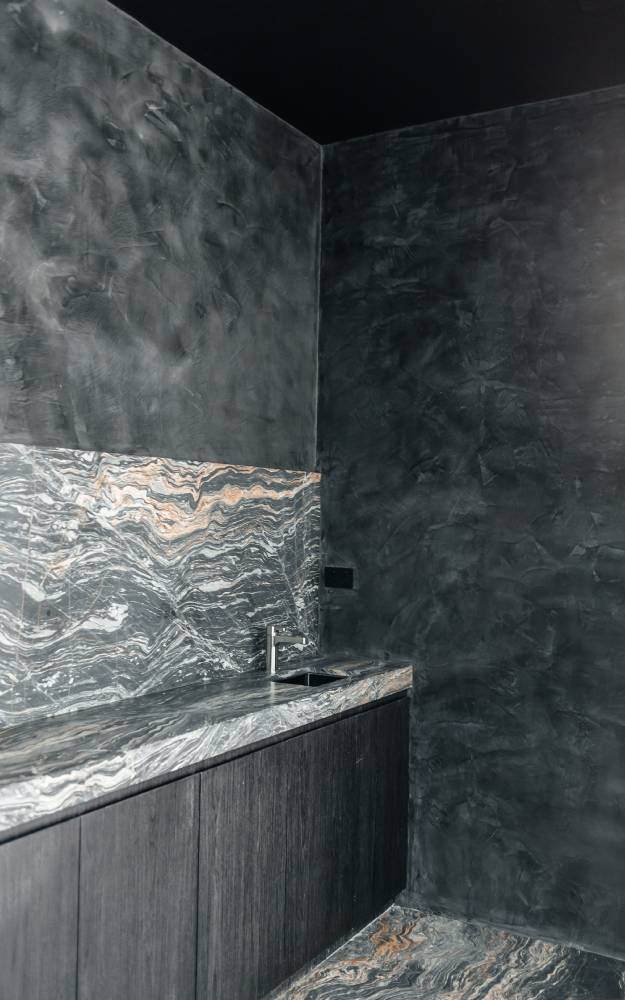
Kitchen Floors
A microcement kitchen floor flows seamlessly into adjacent dining and living areas, with no transition strips, no threshold changes, and no grout channels trapping grime. It delivers the polished concrete aesthetic without structural requirements, and can be applied directly over existing tiles in most cases.
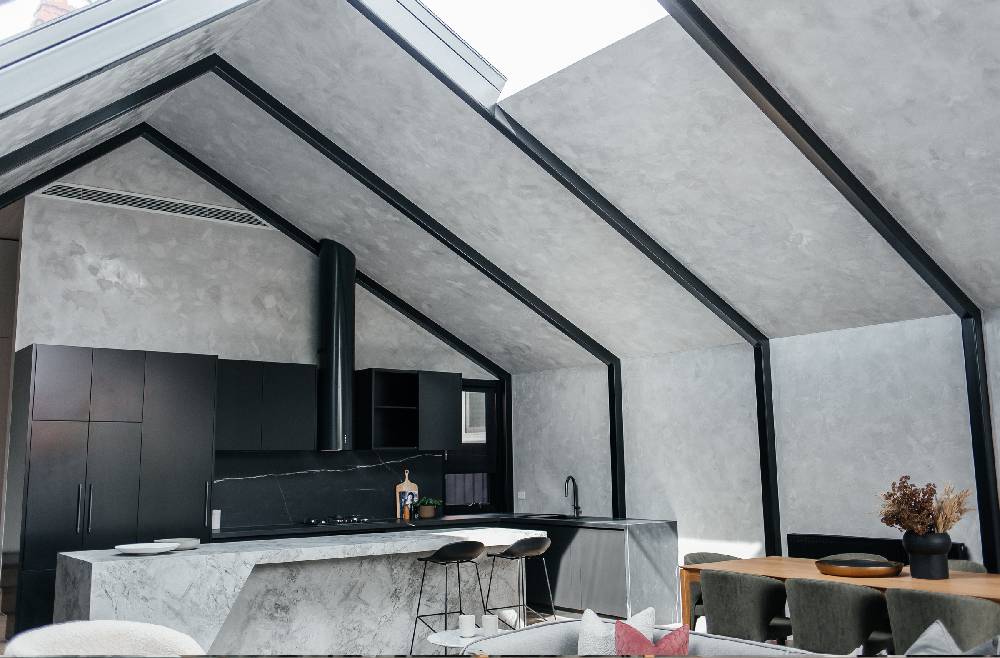
Island Benches
Island benches benefit particularly from microcement’s hand-applied nature. Edges can be shaped, corners can be softened, and the entire piece, top and sides, can be finished in one continuous surface. A microcement island bench is a sculptural object as much as a functional one.
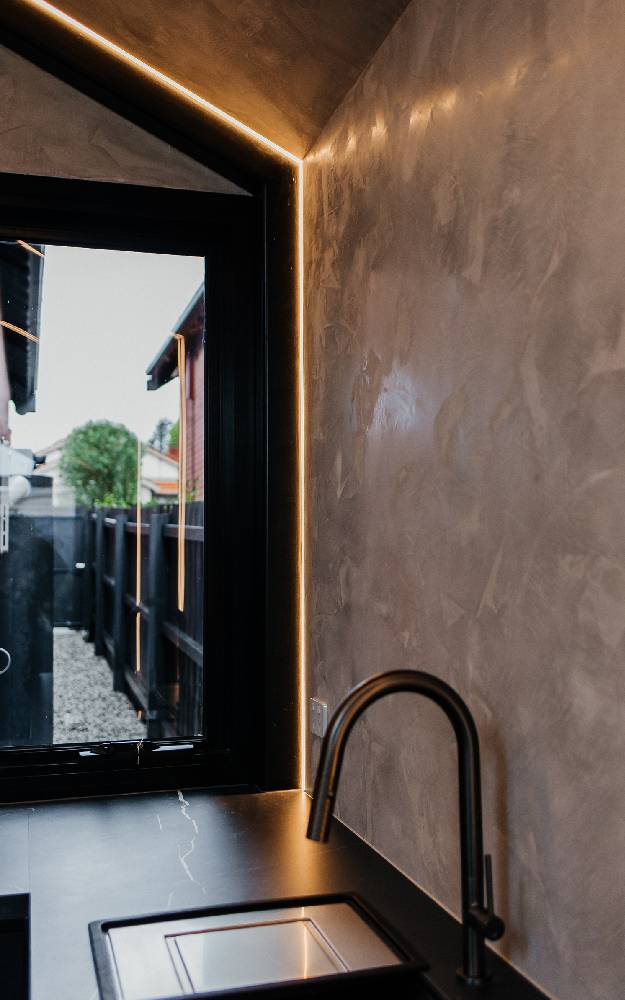
Cabinet Faces & Plinths
For full design integration, microcement can be applied to cabinet door faces and kitchen plinths creating a space where every surface speaks the same material language. This is particularly effective in contemporary and minimalist kitchen designs.
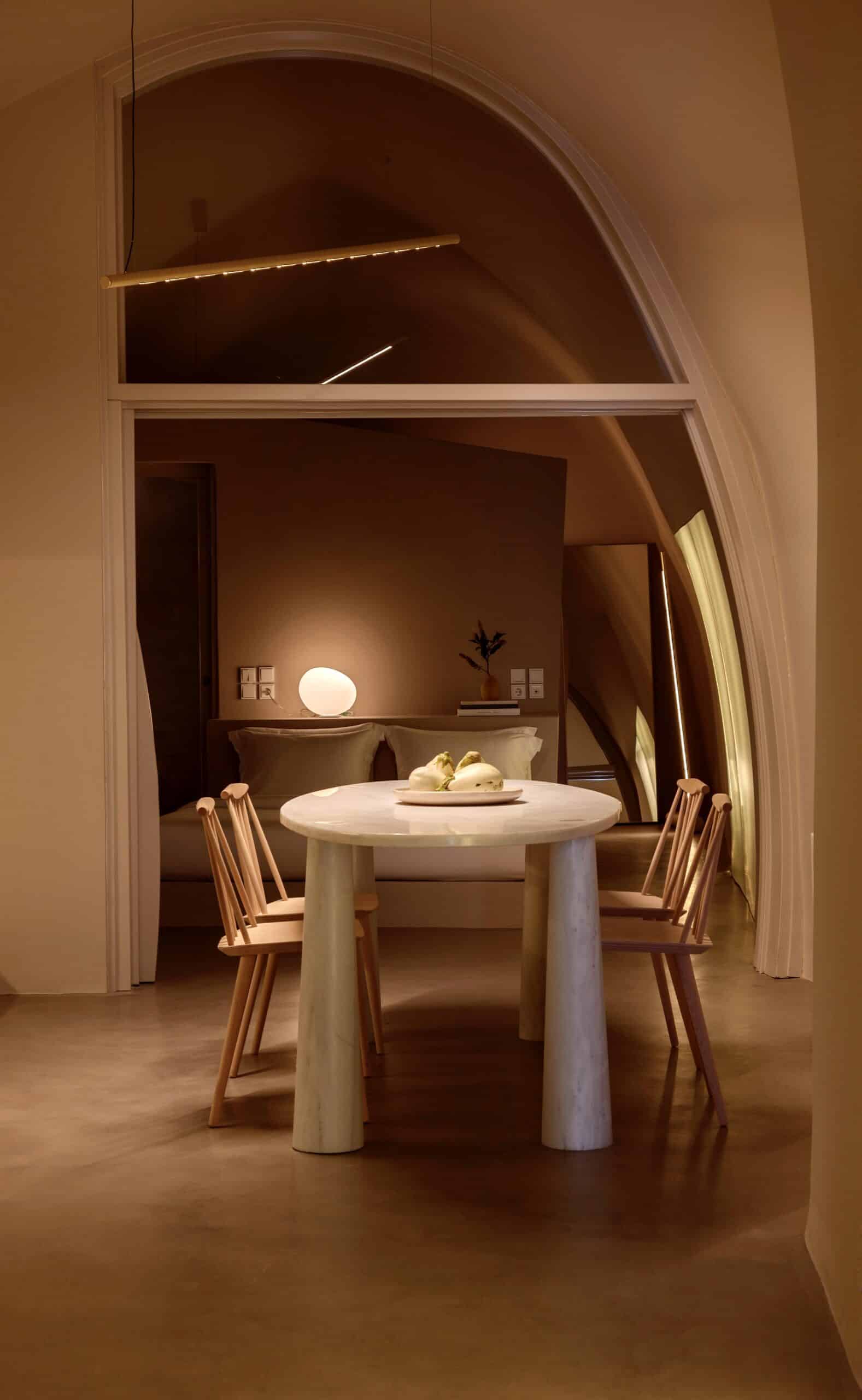
Where Microcement Works in Your Kitchen - and Where It Doesn't
Most installers won’t tell you this. We will.
Microcement performs exceptionally across almost every kitchen surface. There is one area where we advise caution: directly behind a cooktop or open flame. Heat and cooking oils can migrate into the sealer over time, causing staining that is difficult to reverse. For this zone, a heat-resistant panel behind the cooktop with microcement continuing on either side is the smarter design solution.
Here’s the honest guide:
- Kitchen benchtops: sealed, durable, seamless. Ideal application.
- Island benches: including integrated sinks and curved edges.
- Kitchen floors: continuous with open-plan living zones.
- Splashbacks (away from direct cooktop heat): seamless, grout-free, colour-matched.
- Cabinet faces & plinths: full design integration.
- Directly behind cooktop/open flame: not recommended. We’ll advise the right design solution for this zone at quoting stage.
This is the conversation we have with every client before a single coat is applied. You deserve to know what you’re buying before you commit.
Applied Over Your Existing Kitchen Surfaces
One of the most practical advantages of microcement for Melbourne kitchen renovations is that, in most cases, it doesn’t require demolition.
Microcement can be applied directly over:
- Existing kitchen tiles (walls and floors)
- Laminate benchtops
- Existing concrete or screed floors
- Timber floors (with correct substrate preparation)
- Existing painted or primed surfaces
The process involves mechanically preparing the surface for adhesion, applying the correct primer system, then building up the microcement base and finish coats in sequence. We assess every substrate at quoting stage, and any issues with hollow tiles, movement, or adhesion are identified before we start, not discovered halfway through.
This approach eliminates demolition costs and the weeks of disruption a full strip-out involves. In many Melbourne kitchen renovations, overlaying existing surfaces is not just the faster option, it’s the structurally smarter one.
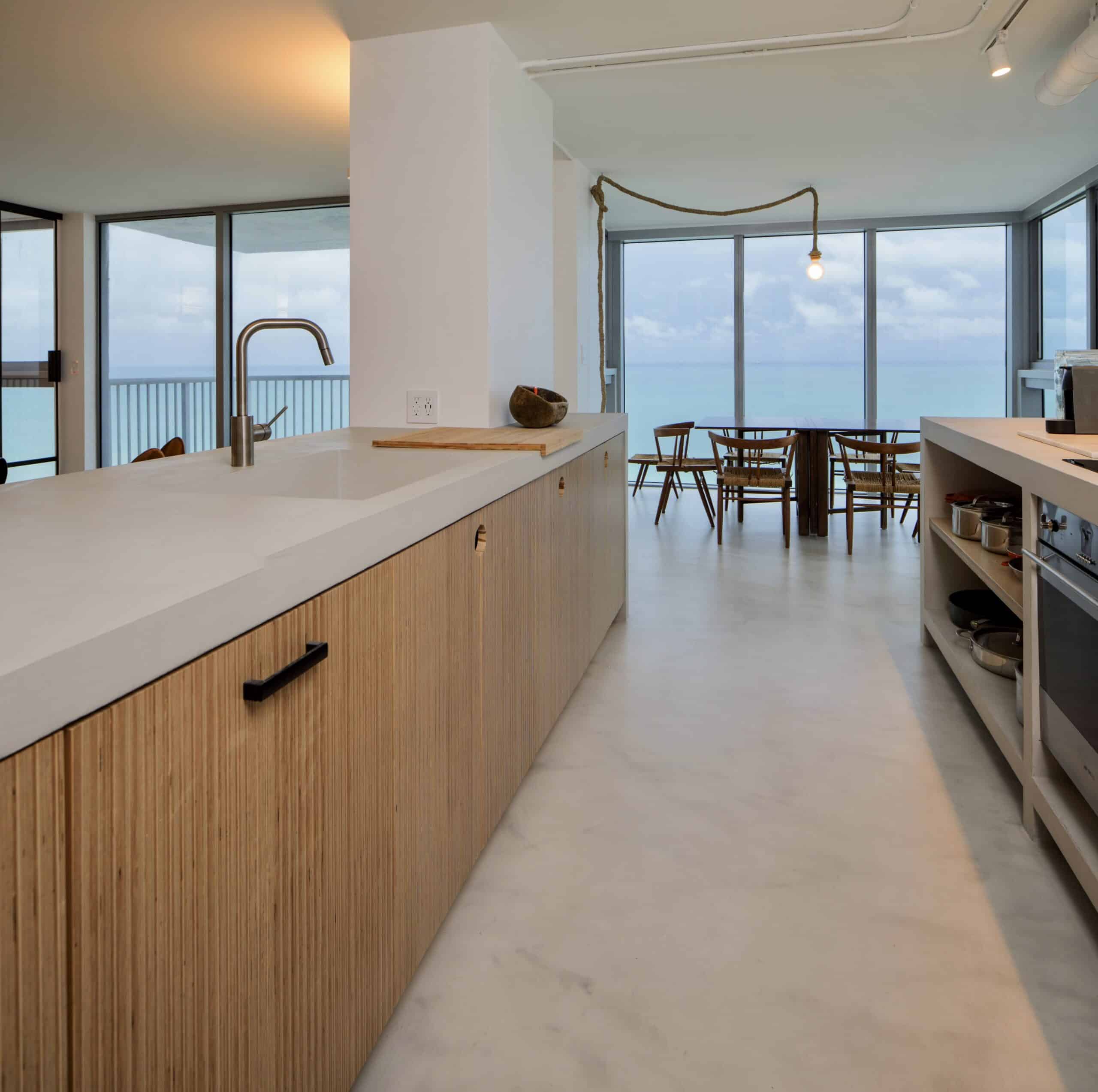
Microcement vs Stone & Tile in the Kitchen
Melbourne homeowners considering a kitchen renovation typically compare microcement against engineered stone, natural stone, and porcelain tile. Here’s how they stack up in real-world kitchen use:
Microcement Kitchen Cost Melbourne
Every microcement kitchen is quoted individually the investment reflects the actual scope of work specific to your space, not a generic price list.
The factors that shape your kitchen quote include:
Surface area: Total benchtop, splashback, floor, and wall coverage.
Substrate condition: Whether existing surfaces are suitable for direct overlay or require additional preparation.
Surface type: Floors, benchtops, splashbacks, and walls each involve different system requirements and sealing specifications.
Finish complexity: Standard smooth finish vs. textured, multi-tone, or decorative applications with integrated detailing.
Project scope: Single splashback installations vs. full kitchen renovations vs. combined kitchen and living area floors.
Our quotes are fixed-price. After assessing your kitchen in person or via detailed photos and measurements, the price we give you is the price you pay. No hourly rates. No variations on standard scope.
For context on what influences microcement costs across different project types, visit our Microcement Cost Guide
Care & Maintenance - What to Know
A microcement kitchen is genuinely low maintenance. No re-grouting. No periodic professional treatment. Here’s the everyday guide:

Cleaning
pH-neutral cleaner and a damp cloth or mop. No bleach, no acidic cleaners, no abrasive scrubbers.

Benchtops
Always use a cutting board. Microcement is hard but not impervious to direct knife contact. Wipe spills promptly, especially oils, acids (citrus, vinegar), and red wine.

Floors
Sweep regularly to remove grit and debris, which can be abrasive underfoot. A clean microfibre mop is ideal for routine cleaning.

Resealing
Benchtops under heavy daily use may benefit from a reseal every 3–5 years. This is a simple process, not a full reinstallation and restores the surface’s protective barrier.
The Installation Process - What to Expect
Days 1–2: Preparation Surface cleaning, mechanical keying (over existing surfaces), filling of any joints or transitions, and primer application. The quality of preparation determines the quality of the finished result.
Days 2–3: Microcement Application Base coat and finish coat applied in sequence with mandatory curing time between layers. Trowel technique, environmental conditions, and mixing precision all affect the final surface. This is the most skill-dependent stage of the process.
Days 3–5: Sealing Multiple coats of sealer appropriate to the surface type (benchtop-rated, floor-rated) applied and fully cured before the kitchen is returned to use.
Typical total timeline: 3–6 days for a standard kitchen. A clear day-by-day schedule is included in every quote.
Frequently Asked Questions
Is microcement suitable for kitchen benchtops?
Yes. A professionally installed and correctly sealed microcement benchtop is durable, resistant to everyday spills and moisture, and exceptionally beautiful. Always use a cutting board and clean spills promptly, the same care you’d give any quality benchtop surface.
Can microcement be used as a kitchen splashback?
Yes, with one important qualification. Microcement performs well as a splashback away from direct cooktop heat. Directly behind a stove or open flame, cooking oils and heat can affect the sealer over time. We advise a heat-resistant panel in the immediate cooktop zone, with microcement continuing on either side. We’ll discuss the right solution for your kitchen at quoting stage.
Can microcement go over my existing kitchen tiles or benchtop?
In most cases, yes. Provided existing surfaces are firmly bonded and structurally sound, microcement can be applied directly over tiles, laminate, and existing benchtops, eliminating the need for demolition. We assess and confirm suitability at quoting stage.
Is microcement heat-resistant?
Microcement can tolerate moderate heat but is not a heat-proof surface. Always use a trivet or heat mat for hot pots and pans on a microcement benchtop. Do not apply directly behind an open flame cooktop.
How do I clean a microcement kitchen?
pH-neutral cleaner and a damp cloth or mop. No bleach, no acid-based cleaners, no abrasive pads. Clean spills as they occur. Microcement sealed correctly is highly resistant to staining, but prolonged exposure to oils and acids should be avoided.
How long does a microcement kitchen last?
A correctly installed and sealed microcement kitchen typically lasts 10–15 years. Benchtops under heavy use may benefit from resealing every 3–5 years. The material itself does not degrade, it is the sealer layer that wears, and resealing is a simple, cost-effective process.
What colours and finishes are available?
Microcement accepts a wide range of pigments. Popular kitchen choices include warm whites, soft greige, mid grey, charcoal, and muted taupes. Finish can range from a refined matte to a polished surface that reflects light. We provide samples and can match to your existing palette or designer specification.
Do you work across all Melbourne suburbs?
Yes. We regularly work across inner and middle-ring Melbourne, see our full suburb list below.
Why Melbourne Artisan for Your Microcement Kitchen?
Award-winning kitchen work is not a claim, a result: Australia’s Best Kitchen 2023. Interior Design Excellence Award. Australia Design Finalist. These aren’t participation certificates — they reflect the standard of work we deliver on every project.
No subcontractors: Your kitchen is installed by our team, not handed to a third party. This is how we maintain consistency across every project we take on.
Fixed-price quotes: We quote after assessing your kitchen. The price we give you is the price you pay, no hourly rates, no variations for standard scope.
Trusted by Melbourne’s leading architects and designers, we work with architects, interior designers, and luxury residential clients who specify us by name. Our commercial portfolio, including work for global brands such as Dior (South Yarra), reflects the precision we bring to every residential kitchen.
A real portfolio of Melbourne kitchens. Ask to see completed kitchen projects at a similar scale and finish to yours. We can show you.
Suburbs We Serve
We regularly install microcement kitchens across Melbourne’s inner and middle suburbs:
- South Yarra
- Prahran
- Toorak
- Malvern
- Hawthorn
- Kew
- Camberwell
- Richmond
- Fitzroy
- Collingwood
- Brunswick
- Northcote
- Thornbury
- Ivanhoe
- Balwyn
- Canterbury
- Port Melbourne
- Albert Park
- Middle Park
- Brighton
- Bayside
- Glen Waverley
- Doncaster
- Surrounds
Not on the list? Get in touch, we work across Greater Melbourne.
Get a Microcement Kitchen Quote in Melbourne
Ready to explore microcement for your kitchen? Send us the following and we’ll come back to you with honest advice on suitability and a clear fixed-price quote:
No obligation. No pushy process. Just straight advice from the team who'll do the work.